Dog owners become experts in noticing small mysteries. One week the mystery is a dog that seems unable to stop licking its front paws. The next it is the same animal stepping onto the lawn and eating grass with the concentration of a miniature cow. Both behaviors are common, and both inspire the same worried question: is this normal, or is my dog trying to tell me something?
The answer depends less on the behavior itself than on its intensity, frequency and context. Dogs sometimes lick their paws simply to clean themselves, and many perfectly healthy dogs eat grass. But persistent paw licking can signal itching, allergies, parasites, injury, infection or pain, while sudden or excessive grass eating alongside vomiting, diarrhea or lethargy can point to gastrointestinal trouble.
Why dogs lick their paws
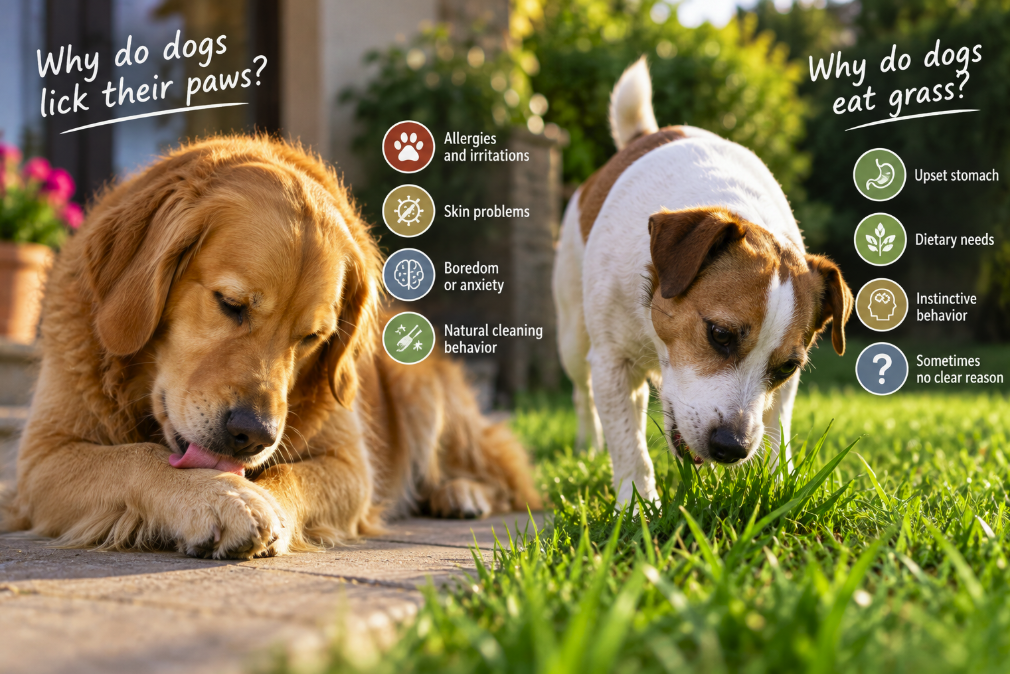
Occasional licking is part of normal canine grooming. A dog that comes inside after walking through wet grass, dust or sand may spend a little time cleaning its feet. The concern begins when licking becomes frequent, intense or focused obsessively on the same paw.
One of the most common reasons is itchiness. VCA Animal Hospitals notes that allergies are a major cause of paw licking. Environmental allergens such as pollen can contribute, as can food allergies and substances that directly contact the feet. Once a dog repeatedly licks itchy skin, moisture and self-trauma can damage the skin barrier, encouraging bacterial or yeast overgrowth and creating an unpleasant cycle: itch, lick, inflammation, more itch.
Parasites are another possibility. Fleas, ticks and mites can cause intense irritation, although the distribution of itching varies. Skin infections can do the same. If the paws are red, swollen, smelly, discolored or producing discharge, repeated licking deserves veterinary attention rather than being dismissed as a quirky habit.
A dog that suddenly concentrates on one paw may have a much simpler mechanical problem. A thorn, splinter, grass awn or small stone can lodge between the toes or pads. Cuts, cracked pads, torn nails, insect stings and burns from hot pavement can all prompt licking. The American Kennel Club's veterinary guidance recommends examining the paw carefully when licking starts abruptly, particularly when one foot receives most of the attention.
Pain does not always originate in the skin. Arthritis and other orthopedic problems can lead some dogs to lick a painful leg or paw. That is especially worth considering in an older dog whose licking appears alongside limping, stiffness or reluctance to move.
Then there is behavior. Boredom, stress and anxiety can contribute to repetitive licking, and in some dogs it can become compulsive. But “he's just bored” should not be the first conclusion when a dog is licking itself raw. Veterinary behavior guidance emphasizes ruling out physical causes such as itching, infection and pain before diagnosing a repetitive behavior as compulsive.
Why dogs eat grass
The grass question comes with one of the most persistent myths in pet ownership: dogs supposedly eat grass because they feel sick and deliberately want to make themselves vomit. That can happen in individual cases, but the evidence does not support it as a universal explanation.
Grass eating is widespread among dogs that appear healthy. Veterinary summaries cited by the American Kennel Club report that only a minority of dogs frequently vomit after eating grass, and relatively few show signs of illness before grazing. In other words, seeing a dog chew a few blades of grass does not automatically mean an upset stomach is on the way.
So why do it? There may not be one answer. Grass and other plant material are not completely alien to canine behavior, and eating vegetation may simply be normal for dogs. Some appear to enjoy its taste or texture, particularly fresh spring grass. Others may graze when bored. Fiber has also been proposed as a factor, although a dog eating a complete, balanced diet is not necessarily trying to correct a nutritional deficiency every time it samples the lawn.
Gastrointestinal discomfort remains one possible explanation in some animals. A dog with an empty or irritated stomach may suddenly consume grass and then vomit bile or plant material. What matters is the pattern. Occasional grazing by an energetic dog with a normal appetite and normal stools is very different from frantic grass eating accompanied by repeated vomiting, diarrhea, abdominal discomfort, weight loss or lethargy.
When ordinary behavior becomes a clue
With both paw licking and grass eating, owners often get into trouble by looking for a single universal explanation. “Allergies” cannot explain every licked paw, just as “upset stomach” cannot explain every mouthful of grass. Dogs perform the same visible behavior for different reasons.
Frequency is one useful clue. A few seconds of paw cleaning after a walk is ordinary; hours of licking that leaves the skin red or hairless is not. Nibbling grass occasionally on a walk is common; suddenly consuming large amounts while acting ill deserves attention.
Location matters too. If a dog obsessively licks one foot, look for a local injury, foreign object or painful nail. If several paws are persistently itchy, allergies or another skin condition become more plausible. Seasonal patterns can also be informative: environmental allergies may flare when particular pollens are abundant.
Grass itself introduces a separate risk. Lawns treated with herbicides, pesticides or other chemicals should not be considered safe snacks. Grass contaminated with feces can also expose dogs to intestinal parasites. Dogs that compulsively consume large amounts of vegetation can occasionally create digestive problems, and unfamiliar plants are a different issue altogether because some ornamental species are toxic.
A veterinarian should be consulted when paw licking is persistent, causes sores, swelling, bleeding, odor or hair loss, or appears with limping or significant pain. Grass eating warrants more concern when it becomes excessive or occurs with repeated vomiting, diarrhea, loss of appetite, weight loss, blood in the stool or vomit, marked lethargy or other signs of illness.
The most useful approach is therefore observation rather than panic. Check the paws. Notice whether the behavior affects one foot or several. Think about recent walks, seasonal allergies and changes in diet or routine. Watch whether grass eating is casual or frantic and whether the dog remains otherwise completely normal.
Dogs cannot explain an itch, a thorn or a queasy stomach, so behavior becomes part of their vocabulary. Most paw licking and grass nibbling is not an emergency, and some of it is simply normal dog behavior. But when the pattern changes or becomes obsessive, that repetitive little action can be exactly the clue a veterinarian needs to find the real cause.