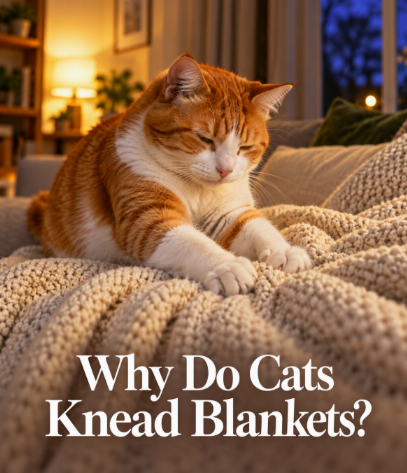
It is one of the small mysteries of living with a cat: the blanket comes out, the paws begin their slow alternating push, and suddenly your pet looks completely absorbed in the job. Cat owners call it “making biscuits,” but kneading is not a random habit. It is a normal feline behaviour with roots in kittenhood, comfort, sleep and scent.
The most familiar explanation starts very early. Nursing kittens rhythmically press their front paws against their mother’s belly, a movement associated with feeding. The action helps stimulate milk flow, but it also happens during a moment of warmth, safety and close contact. For many cats, the pattern survives long after they are weaned. A soft blanket has the right texture to bring that old, calming routine back.
A comfort ritual, not a sign that your cat is hungry
An adult cat kneading a blanket is usually not asking to be fed or imagining that the fabric is its mother. It is more useful to think of it as a learned comfort ritual. Cats often knead when they are settling down, purring, becoming sleepy or sitting close to someone they trust. The action can be part of the same relaxed state behind many purrs, although purring itself can mean more than simple happiness. We explored that complexity in Why Do Cats Purr? The Science Behind Their Most Mysterious Sound.
Not every cat kneads, and not every cat chooses a blanket. Some prefer a cushion, a favourite bed or a human lap. The behaviour varies with personality and experience, so the absence of kneading is not a sign that a cat is unhappy or less affectionate. But when a cat does knead, the soft surface matters: it gives the paws something yielding to press against, much like the bedding a cat might prepare before resting.
It may also be an old sleeping habit
Domestic cats are not the only felines that work over a soft surface before lying down. Wild cats may press down grass or other bedding material as they settle. That does not mean a house cat is carefully constructing a nest every time it attacks a fleece throw, but the behaviour may retain a practical connection to making a resting place feel right. A few measured pushes can be part of getting comfortable before sleep.
There is another detail hidden in those paws. Cats have scent glands between their toes, which means kneading can leave a personal chemical signature behind. A blanket that is repeatedly kneaded becomes familiar in more than one way: it smells like home, and it has been marked by the animal using it. For a creature that relies heavily on scent to understand its environment, that is a reassuring combination.
Why do some cats use their claws?
When the cat is deeply relaxed, claws may come out without any hostile intent. The movement is automatic, and a thick blanket can help protect furniture and human legs. If kneading on your lap is painful, avoid scolding the cat or abruptly pushing it away. A calm redirection to a designated soft blanket is usually kinder and more effective. Keeping claws trimmed can make the ritual easier for everyone.
Some cats also suckle, nibble or drool on the fabric while they knead. In moderation, that can be another soothing behaviour connected to the nursing pattern. The concern is not the kneading itself but whether the cat is swallowing fabric, becoming distressed, or changing behaviour suddenly. Loose fibres and repeated ingestion are worth taking seriously, since they can create a health risk. In those cases, remove the tempting fabric and ask a veterinarian for advice.
What your cat is probably saying
A kneading cat is usually communicating through its body rather than delivering one clear message. It may be saying that the spot feels safe, that it is getting ready to sleep, that the blanket belongs in its comfort zone, or simply that the movement feels good. The context tells the fuller story. Soft eyes, purring, relaxed ears and a tucked-in body point to contentment. Tension, frantic pacing or destructive chewing suggest that something else may be going on.
So the next time your cat starts its tiny bakery shift on a blanket, there is no need to interrupt. Offer a soft, durable spot of its own and let the ritual happen. Those rhythmic paws are a small piece of kitten instinct still living inside an adult animal—one that has become part comfort, part bedtime preparation and part quiet declaration of home.
Sources consulted: PetMD, Cats Protection and Live Science.