There are few moments quite like looking into the toilet and discovering that something which is normally brown has turned unmistakably green. It is the kind of question many people would rather type into a search box than ask another human being: why is my poop green?
Fortunately, green stool is usually much less alarming than it looks. Food is a common explanation, especially leafy vegetables and artificial coloring. Another major reason is the speed at which material travels through the intestine: if it moves too quickly, the naturally greenish bile involved in digestion may not have enough time to undergo the chemical changes that normally help make stool brown.
Why poop is usually brown in the first place
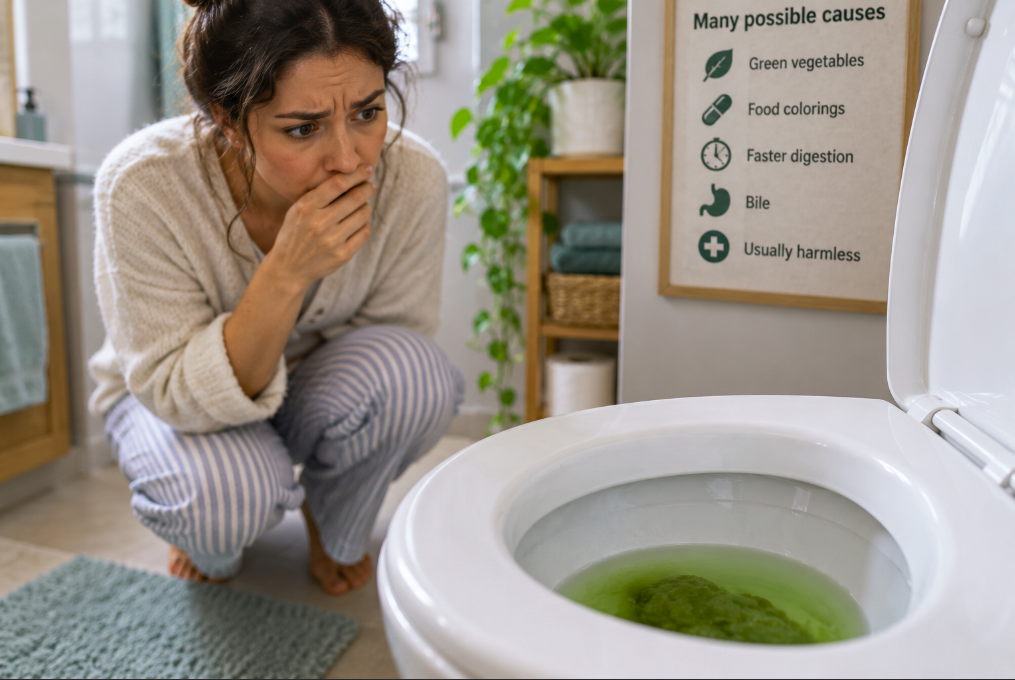
To understand green poop, it helps to understand why it is normally brown. The liver produces bile, a yellow-green digestive fluid that helps the body digest fats. As bile and the contents of a meal move through the digestive tract, bile pigments are chemically transformed. The end result contributes to the familiar range of brown shades seen in ordinary bowel movements.
That means green is not necessarily a foreign color entering the digestive system. It can be a sign that the digestive process has simply moved along differently than usual. The Mayo Clinic explains that when food travels through the large intestine too quickly — as can happen with diarrhea — bile may not have time to break down completely. The stool can therefore remain green.
This also explains why a sudden bout of diarrhea can produce a color that seems dramatically different from normal. The color and the loose consistency may be two consequences of the same thing: accelerated intestinal transit.
Sometimes the answer was on your plate
Before assuming that green stool signals an illness, think about what you have eaten over the previous day or two. Spinach, kale, broccoli and other deeply green vegetables contain chlorophyll, the pigment that makes plants green, and eating enough of them can tint stool. Mayo Clinic guidance on green stool lists green vegetables among its common causes.
Food coloring can be even more visually dramatic. Brightly colored frosting, candy, ice pops, drinks and other processed foods can send pigments through the digestive tract. Curiously, the culprit does not always have to look green. Blue or purple coloring can combine with digestive pigments and produce a greenish result.
Iron supplements are another established cause. They are better known for making stool very dark, but they can also produce dark-green shades. Certain medications, including antibiotics, may indirectly change stool color by affecting digestion or the gut microbiome, and medicines that cause diarrhea can accelerate transit enough to leave more visibly green bile in the stool.
In these situations, the unusual color is often temporary. Cleveland Clinic gastroenterologist Christine Lee notes that food-related color changes should disappear after the source has passed through the body. If you feel well and can connect the color change to something you recently ate, an isolated green bowel movement is generally not a reason for panic.
When green poop comes with diarrhea
Green diarrhea deserves a little more attention, not because green itself is especially dangerous, but because diarrhea has many possible causes. A gastrointestinal infection can speed intestinal transit dramatically. Bacterial infections, viruses and parasites can therefore produce greenish diarrhea as bile rushes through before its color has fully changed.
Other gastrointestinal conditions can sometimes produce the same effect. The Cleveland Clinic notes that green stool can occur with conditions including irritable bowel syndrome, ulcerative colitis and Crohn's disease. These are possibilities, not conclusions to draw from color alone. A single green bowel movement cannot diagnose any of them.
The surrounding symptoms matter much more. Persistent diarrhea accompanied by fever, significant abdominal pain, vomiting, unexplained weight loss or bleeding is different from seeing green stool once after a spinach-heavy dinner. Dehydration is another concern with ongoing diarrhea; warning signs can include marked thirst, dizziness, weakness and reduced urination.
Mayo Clinic advises contacting a healthcare professional when green stool persists for more than a few days and seeking prompt help if diarrhea leads to dehydration. MedlinePlus similarly recommends medical attention for diarrhea that persists or occurs with blood or mucus, ongoing fever, nausea or vomiting, or persistent abdominal pain.
Other stool colors can carry different clues
One reason green stool causes so much anxiety is that people know stool color can occasionally signal a medical problem. That is true, but not all colors have the same significance. Bright red stool can come from foods such as beets or red coloring, but it can also represent bleeding from the lower digestive tract. Black stool can be caused by iron, bismuth-containing medicines or certain foods, but black, tarry stool may indicate bleeding higher in the gastrointestinal tract.
Very pale, gray, white or clay-colored stool is a different issue again. Because bile normally contributes color to stool, persistently pale stool can indicate that too little bile is reaching the intestine. Mayo Clinic advises medical evaluation for white stool, particularly because obstruction of bile flow is one possible cause.
Context is therefore more useful than trying to decode bowel movements as a simple color chart. What did you eat? Have you started a medication or supplement? Is the stool loose? Do you otherwise feel normal? Has the change lasted for hours, days or weeks? Those details are much more informative than “green” by itself.
The strange color is usually a short-lived clue
For most adults, the answer to “why is my poop green?” is reassuringly mundane. Perhaps lunch contained more spinach than usual. Perhaps a vividly colored dessert survived digestion more successfully than expected. Or perhaps food moved through the intestine so rapidly that bile did not complete the changes that normally help turn stool brown.
Green stool on its own is rarely an emergency. What matters is persistence and what comes with it. If the color lasts for several days without an obvious dietary explanation, or appears alongside significant pain, fever, vomiting, dehydration, bleeding, weight loss or prolonged diarrhea, it is sensible to contact a healthcare professional rather than trying to diagnose the cause from color alone.
The toilet bowl can reveal clues about digestion, but it is an imperfect diagnostic tool. Sometimes green really does mean nothing more mysterious than vegetables, food dye and a digestive system that was moving unusually fast.