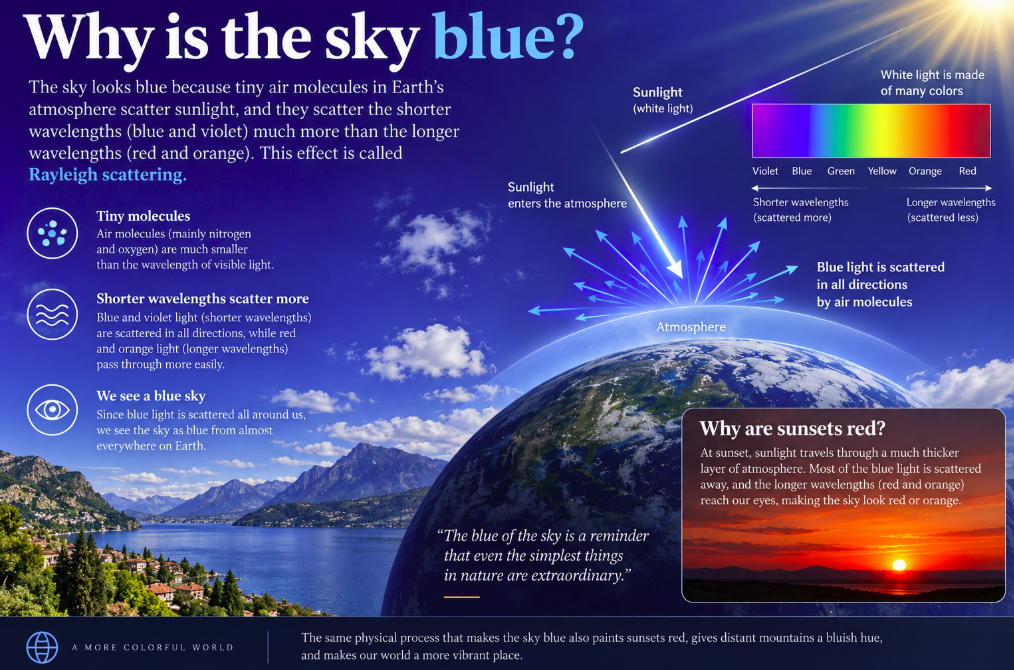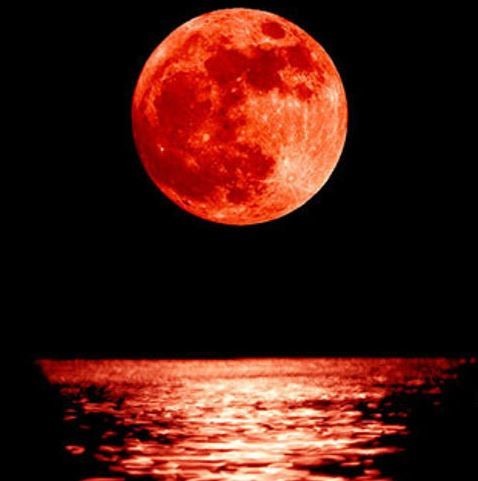
The moon can appear red during a total lunar eclipse, a phenomenon that has always intrigued observers. This occurs when the Earth comes between the Sun and the Moon, blocking direct sunlight. However, some of the sun's rays are reflected in the Earth's atmosphere, especially in the lower reaches, where the air is denser and the atmosphere acts like a prism. These rays, after being deflected, reach the Moon, but the light that arrives is filtered: shorter colors, such as blue and violet, are scattered more easily, while red and orange tones pass through. This creates the effect of a "red" or "copper" Moon, a color reminiscent of fire or flame.
This phenomenon is not an everyday occurrence, but occurs when the Moon, Sun, and Earth align in a specific way. Total lunar eclipses are relatively rare, but when they do occur, they often generate great interest. For example, during the 2018 eclipse, many people around the world gathered to observe the sky, as the Moon turned red.
The effect is similar to looking at the Sun during a total eclipse: the light is filtered, and the colors change. However, the difference is that the Moon is not directly illuminated by the Sun, but by reflected light, which amplifies the phenomenon.
If you happen to see a red Moon, it's not a sign of something strange, but rather an opportunity to observe how light interacts with the atmosphere. It's a visual reminder of how nature can transform illumination into something extraordinary.